Beyond the Garden: Recognising Children’s Sustainability Thinking in Early Childhood Education in Australia
Sustainability in early childhood isn’t only found in gardens or recycling tubs. It emerges in the small decisions children make every day—how they use materials, solve problems together, and show care for living things. These moments reveal responsibility, empathy, and connection, yet they often pass quietly unnoticed.
Across early learning services in Australia, educators are reflecting on how children’s everyday actions demonstrate care for people, place, and materials. As 2025 draws to a close, it’s worth pausing to notice these threads running through your Australian early childhood program. How has children’s sustainability thinking shown up in your service—and how might you extend it next year?
Sustainability in Everyday Play in ECEC
Children demonstrate sustainability in early childhood programs through everyday routines, not just planned “green activities.” From reusing materials to caring for plants or animals, these small actions show developing values of care, fairness, and connection.
Reflecting on these moments helps educators see children as co-researchers and collaborators in sustainability, aligning with the EYLF 2.0 Sustainability Principle.
Scenario 1: Materials and Meaning
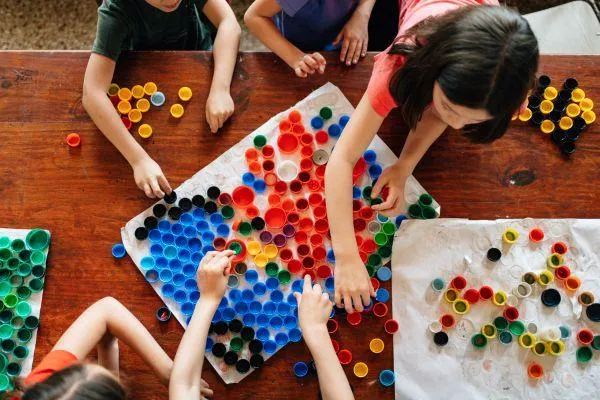
Imagine a group of children preparing a craft for their families. Instead of new materials, they sort through collage scraps, deciding which pieces could be reused. They discuss which items are “too good to throw away.”
Imagine next year:
You could begin planning with questions like: “What materials tell a story about care and reuse?” rather than “What craft will we make?”
Scenario 2: Caring for Place in Early Childhood
During outdoor play, a child notices the garden is dry. They fetch a watering can and invite others to help, sparking a conversation about how plants feel if thirsty. No adult prompts this—the child is showing ecological awareness and empathy.
Imagine next year:
Documenting these moments as evidence of environmental learning in early childhood could shape how sustainability is reflected in your ECEC program planning.
Scenario 3: Collaboration and Connection
A group negotiates turn-taking with a favourite piece of equipment. They make a list and discuss fairness. Though a social skill, this also demonstrates sustainability in action: learning to share resources equitably and sustain relationships.
Imagine next year:
Recognising social connection as part of sustainability could influence how routines, curriculum, and team reflection are designed across your Australian early childhood service.
Reflection Questions for Educators
Where have children shown curiosity about how things work, grow, or change?
Which daily routines already encourage care for people, materials, or the environment?
How might you make these moments visible in your planning and documentation next year?
Recognising Rather Than Adding
Sustainability in early childhood doesn’t need to be added—it needs to be recognised. When educators notice these everyday moments, sustainability becomes a shared lens throughout the service rather than an extra task on the plan.
Take Action:
To support your reflection and planning, explore the EYLF 2.0 Sustainability Principle Decoder, a practical guide for recognising and extending children’s sustainability thinking in Australian early childhood services →
👉 Get Instant Access to the Decoder
Continue the conversation - check out Part 1 of our podcast conversation series Reflect Reconnect and Reimagine here 👉 Episode 31 More than a Garden: Recognising Children's Sustainability Thinking


