Blog 8: You Are a Catalyst
Every morning, you arrive at your early childhood setting and begin the work that shapes futures.
You comfort a distressed toddler. You facilitate play among children as they negotiate shared space. You notice a child's fascination with ants crossing the outdoor path and pause to wonder alongside them.
These moments might seem ordinary. But they're not.
During each of these interactions, something extraordinary is happening. You're working as a catalyst for transformation that will ripple across decades.
The Intersection Where Everything Converges
You work at a unique moment in human development. The first 2,000 days, from conception through age five, represent the most powerful window for shaping both human potential and sustainability consciousness that a person will ever have.
During these years, over one million neural connections form every second in children's developing brains. The architecture being built right now will support or limit their capacities for the next seven decades. At the same time, children are forming their fundamental relationship with the natural world—a relationship that research shows will predict their attitudes and behaviours about sustainability more strongly than any education they receive later.
These aren't parallel processes. They're integrated.
The child developing secure attachment and emotional regulation through your responsive care is simultaneously developing the capacity to care about living things beyond themselves. The child building problem-solving skills and cognitive flexibility through experiences you facilitate is simultaneously developing the systems thinking required to engage with complex sustainability challenges.
You cannot separate human development from environmental consciousness during these grounding years. They're the same developmental story.
What Catalyst Actually Means
A catalyst accelerates transformation without being consumed by it. Your presence, your attitudes, your daily choices are catalysing development that extends far beyond what's immediately visible.
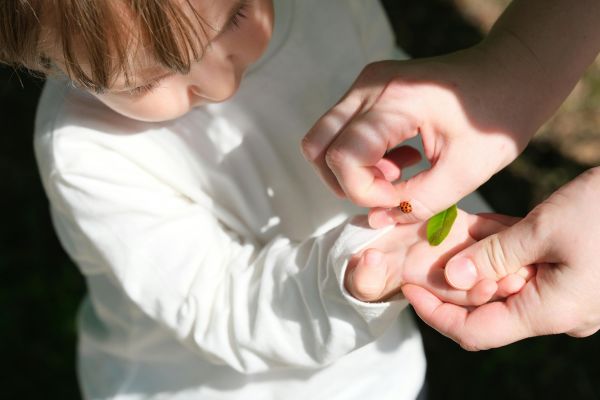
Consider what happens when you respond to a child's discovery of a beetle with genuine curiosity rather than reluctance. In that moment, you're not just teaching about insects. You're shaping neural pathways about whether other living things deserve interest and care. You're influencing whether this child develops biophilia, an affinity for the natural world, or biophobia, fear and aversion.
When you protect extended time outdoors in varied weather, you're not just meeting physical activity requirements. You're providing the direct sensory experiences that literally cannot be replicated indoors or through screens. You're supporting children to develop relationships with specific places, particular trees, individual creatures that they come to know intimately.
When you model systems thinking by noticing connections, how rain fills the bird bath, how worms help break down food scraps, how certain plants attract butterflies, you're building capacity for understanding interdependence that will serve children across their entire lives.
Early Childhood Sustainability: The Three Domains Working Together
Education for Sustainability in early childhood isn't just about environmental protection. It encompasses three interconnected domains: environmental, social, and economic. And you're already working across all three.
When you create inclusive environments where every child feels like they belong, you're building social sustainability. When you help children learn to share resources and consider others' needs, you're laying groundwork for economic thinking. When you provide opportunities to connect with and care for the natural world, you're nurturing environmental stewardship.
These domains don't exist in isolation. You cannot address environmental challenges without social justice. You cannot create equitable societies without viable economic systems. You cannot build sustainable economies without healthy ecosystems.
Your daily practice already engages these interconnected systems. The shift is in awareness and intention rather than completely new activities.
Starting Exactly Where You Are: Place-Based Learning in Early Childhood
Perhaps you're thinking: "I'm not a sustainability expert. I don't know enough about environmental issues. How can I take this on?"
Here's what matters: you don't need expertise in sustainability. You need understanding of child development, which you already possess. You need willingness to facilitate a connection with nature and your community, which requires curiosity more than knowledge. And you need recognition of the significance of work you're already doing.
Start small. Start local. Start with the place where children spend their days.
Young children develop connections with the puddles in their yard, the birds that visit their outdoor area, the trees that provide shade during play.
This kind of place-connected learning supports development and is pedagogically sound. Children need to fall in love with specific places before they can care about abstract ecosystems. The particular becomes the foundation for the general.
David Sobel's research is clear: confronting children with adult-level environmental issues before age eleven generates anxiety and apathy rather than action. But helping them develop genuine connections with their local environment during the grounding years builds the emotional foundation for environmental stewardship that lasts.
Your Team's Collective Strength
This work doesn't fall on any individual educator. It happens through the collective strengths of your team.
The gardener might lead vegetable growing projects. The person interested in indigenous perspectives might help children learn about seasonal patterns and traditional plant uses. The creative art enthusiast might support ephemeral sculpture with found materials. The insect lover might lead bug hunts and habitat creation. The photographer might document learning or create stories with the children as the main characters.
These different strengths create a rich web of sustainability learning without any single person needing expertise in everything. Together, you're creating multiple entry points for children to connect with the world around them.
This collaborative approach also addresses the reality of time and capacity. You're not adding sustainability as another isolated responsibility. You're recognising how each team member's existing interests already contribute to sustainability learning when viewed through this lens.
Children Have Agency Now: Environmental Action in Early Childhood
Here's something vital: children aren't just future citizens who will someday care about the planet. They are present members of ecological communities right now.
A four-year-old who carefully relocates a spider rather than killing it is already exercising environmental values. A five-year-old who notices the bird bath is empty and fills it is already taking environmental action. These aren't rehearsals for future activism. They're genuine expressions of care happening in the present.
When you recognise and value these expressions, you're reinforcing children's sense of themselves as people who can positively impact the living world around them. Not someday. Today.
Research consistently shows that children are capable of sophisticated thinking about natural systems when they have rich, hands-on experiences. They can observe cause and effect. They can notice patterns. They can understand interdependence.
We often underestimate young children's capacity to grasp complex relationships. When those relationships are made visible through direct experience, children develop understanding that serves them across their lives.
The Ripple Effect: How Early Childhood Educators Influence Sustainable Futures
Your influence extends far beyond the children directly in your care.
Children who develop strong nature connections bring those attitudes home. Parents notice changes and often become more receptive to sustainability practices when advocated by their children. Your service's visible prioritisation of outdoor play and nature connection influences community norms about quality early childhood education. Other services notice and follow. Your practice creates permission and precedent.
As this shift occurs across the sector, it influences policy and systems. When early childhood services demonstrate that nature-based, sustainability-focused practice produces better developmental outcomes, that creates evidence for change.
Your daily practice with children is simultaneously contributing to sector transformation and broader cultural change. The individual educator making intentional choices becomes part of a collective movement with systems-level impact.
The Critical Window for Brain Development and Environmental Consciousness
Children in early childhood services right now will be adults in the 2040s and beyond. They'll be making critical decisions about the future of the planet during the period when climate impacts intensify and biodiversity loss accelerates.
Whether they have emotional capacity to care enough to act, whether they have cognitive capacity to think systemically about complex challenges, whether they understand themselves as part of or separate from natural systems, all of this is being shaped right now, during the grounding years.
And you are present during this formation period.
This isn't hyperbole. It's what developmental research tells us. You work at the most powerful leverage point that exists, the intersection where human potential and planetary wellbeing meet during the window when both are most transformable.
Trust Your Significance as an Early Childhood Educator
A quiet conversation about why we move slowly around nesting birds. A decision to let children play in wet or muddy areas despite the mess. Taking time to observe decomposition in the compost together.
These moments seem small. But they're planting seeds that may grow into environmental stewardship for decades.
You are not just preparing children for school. You are not just providing care while families work. You are an architect of possibility working during the years when foundations are laid that will support or limit what becomes possible across entire lifetimes.
Every child who develops secure attachment, emotional regulation, and cognitive flexibility through your care is simultaneously developing capacities needed for sustainable futures. Every child who learns to notice, wonder about, and care for other living things through experiences you facilitate is developing an identity of environmental stewardship that may influence decades of choices.
Trust the significance of your work. Act with intention. Recognise that your daily choices create ripples extending far beyond what's immediately visible.
You are a catalyst working during the critical window when transformation is most possible.
Continue Your Learning Journey
Ready to deepen your understanding of this work? Listen to Episode 3 of our podcast series "The First 2,000 Days: Building Brain Architecture and Sustainable Futures" where we explore why early childhood educators are essential catalysts for sustainable futures.
Listen to Episode 3: The Catalyst Effect
Frequently Asked Questions
How can early childhood educators support sustainability without being experts? You don't need to be a sustainability expert. Your understanding of child development is the foundation. Focus on facilitating direct nature experiences, modelling curiosity, and recognising the integrated learning already occurring in your practice.
What is place-based learning in early childhood? Place-based learning helps children develop deep relationships with the specific environment where they spend their days. Rather than teaching about distant ecosystems, children fall in love with their local outdoor area, particular trees, and nearby natural elements.
Why do the first 2,000 days matter for sustainability? During the first 2,000 days, children's brains are forming over one million neural connections per second. This same period is when children form their fundamental relationship with nature. These integrated processes shape both human development and environmental stewardship.
How do early childhood educators influence environmental consciousness? Through your attitudes toward living things, the language you use, the time you protect for outdoor play, and the experiences you facilitate, you're shaping whether children develop connection to or separation from the natural world during the critical window when this relationship forms.


