Not more sustainability to do. More to see
Not more sustainability to do. More to see.
A WORKSHOP FROM PROJECT SUSTAINABILITY COLLECTIVE
Nov 13, 2026 By Lili-Ann Kriegler and Bronwyn Cron
How the educators at Windermere Family Day Care explored a broader view of sustainability and its implications for the children in their care.
Every day, Windermere Family Day Care educators help children make sense of the world around them. On one Saturday in August, they discovered that sustainability was already woven into much of what they were doing. They didn't need another program, more activities or one more thing to add to already full days. They simply needed a different way of seeing.
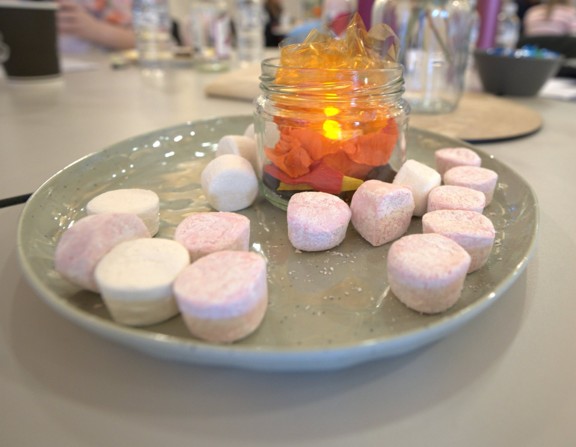
They started the day talking around a tiny marshmallow campfire. By the end of the day, educators who had arrived thinking about compost bins and recycling left seeing sustainability in doctors' play, family lunches, mud kitchens, block construction, gardens, sticks, rocks and conversations. Not more to do. More to see.
Starting Where Educators Are
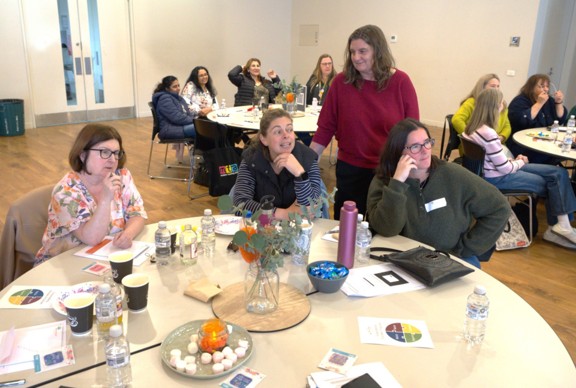
Every weekday, Windermere's Family Day Care educators open their homes to other people's children. They enact different roles: educator, cook, gardener, nurse and storyteller, often all before lunch. They care deeply about the world these children will inherit, and many were already embracing sustainable practices: worm farms, veggie gardens, compost bins, recycled materials for creative experiences, and water from sensory play returned to the garden.
What they wanted was simple. They wanted sustainability to mean something real for the children in their care. On Saturday 8 August 2026, they gave up their weekend to explore what that could look like. The day happened because Kat Naismith, Manager of Early Childhood Education and Care at Windermere, believed her educators deserved the opportunity and invited us in. Thank you, Kat.
Educators are doing good work, but they face real challenges. Before the workshop, we asked them what made sustainability difficult, and they were honest in their answers. One wrote about "balancing sustainable practices with the cost, time, and convenience of running a small family day care." Another found it hard to practice sustainability with children under two, and a third wanted to know how to go about "helping young children understand sustainability concepts."
Beneath those practical challenges sat another. For many educators, sustainability had become synonymous with environmental actions and recycling bins: important but separate from children's everyday learning. One educator captured the feeling perfectly: "There has to be more than just re-use, reduce and recycle."
She was right. Sustainability is so much more. Educators need opportunities to recognise the sustainability already present in their relationships, routines, environments and learning experiences. That's where our work begins. We start where educators are, because meaningful change doesn't come from adding more. It comes from recognising, valuing and extending what is already there. And at Windermere, there was already a great deal to see.
Learning Together
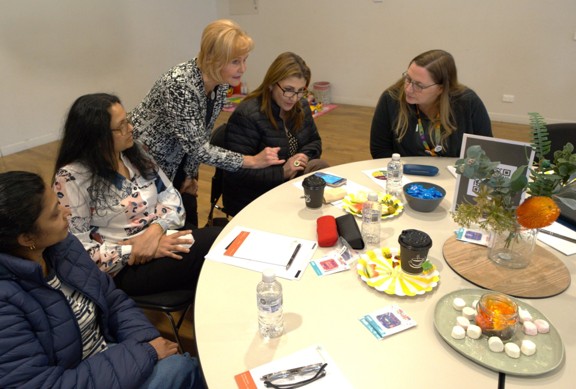
We're Bronwyn Cron and Lili-Ann Kriegler, co-founders of Project Sustainability Collective. Between us, we bring decades of experience in early childhood education, sustainability, STEM and pedagogical practice. Through our work with services across Australia, and the 200 responses to our 2025 Sustainability Snapshot survey, we've seen both the commitment educators bring and the challenges they face in embedding sustainability in meaningful ways.
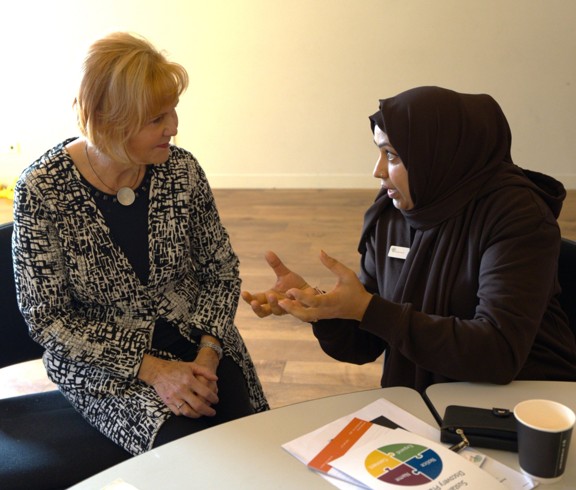
Our approach is dialogue. We bring questions, provocations and structures for thinking, and educators bring their knowledge of children, families and communities. The discoveries belong to all of us.
Creating shared meaning is an important competence for sustainability. When educators and facilitators listen closely, build on each other's ideas and arrive at understanding together, they practise the same skills children need to care for a connected world.
A Structured Investigation
We made one promise at the start: not more to do, more to see. We start where educators are. Our mission is not to add to their tasks, but to focus on and expand the sustainability concepts already in place. Four practices, Notice, Name, Connect and Expand, shaped the whole day: a progressive exploration of sustainability as connection, and of new opportunities for children and educators. It unfolded in four steps, one for each practice.
1. Notice: where did your sustainability understanding begin?
The day began around marshmallow campfires placed on every table. We start with a campfire for a reason. Around a fire, ideas move freely, conversation doesn't belong to one expert, and everyone contributes.
As educators shared stories of their own childhoods, several realised their earliest memories were filled with experiences we would now recognise as sustainable practice. One reflected afterwards on "realising that all my first memories and childhood activities involved sustainable practices." That insight mattered. If ordinary childhood experiences shape these educators' relationships with the world, then the everyday moments they create for children are shaping children's future relationships, too. Childhood shaped them. Now they shape childhoods.
2. Name: one lunch, five dimensions
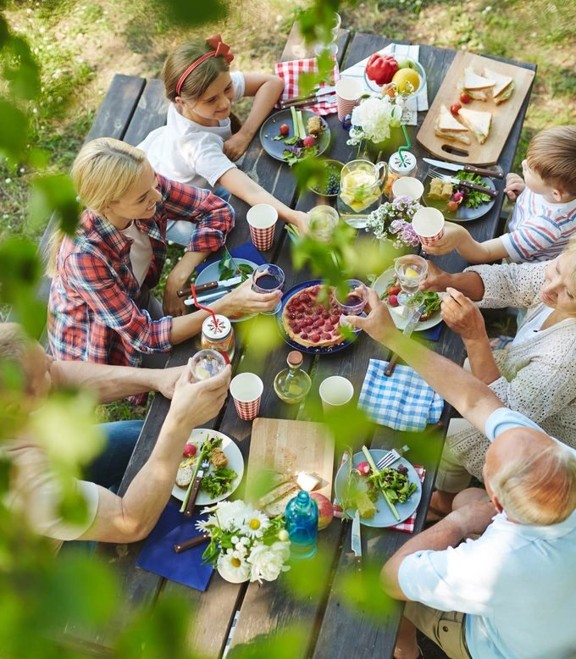
Next, we gave educators an opportunity to identify the language they had noticed. Sustainability is more than an environmental concept. Alongside the environmental dimension sit social, cultural, economic and governance dimensions, and a single photograph of three generations sharing a family lunch revealed all five: where the food came from, who was at the table, the traditions being passed on, what was valued and shared, and who had a voice. Suddenly, sustainability became broader, richer and closer to everyday practice than many educators had imagined. Think AND, not OR.
3. Connect: play is like the lunch
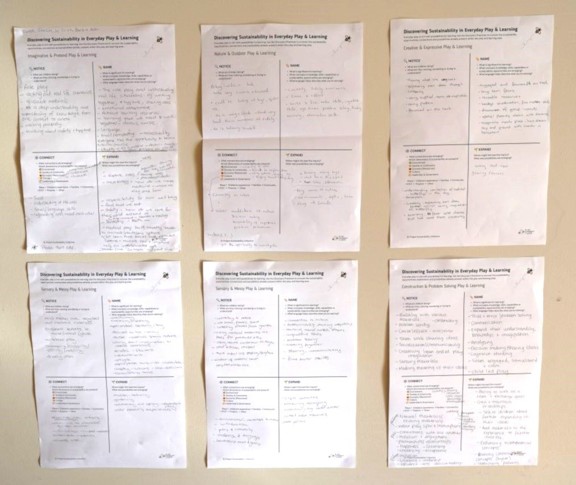
Then came the connection. Play is like the lunch. It seems simple, but every sustainability concept is in play too. We offered five common, everyday play scenarios, chosen by Bron and Lil: imaginative and pretend play, nature and outdoor play, creative and expressive play, sensory and messy play, and construction and problem solving. Each table took one and analysed it with four Discovery Practices: to notice what is really happening beyond the obvious, to name what is significant and give it language, to connect it to children, people, place and the EYLF V2.0, and to expand it into new possibilities and share what has been discovered.
4. Expand: one scenario, all the way
Every table worked through all four practices with its scenario. One table showed just how far Expand can go.
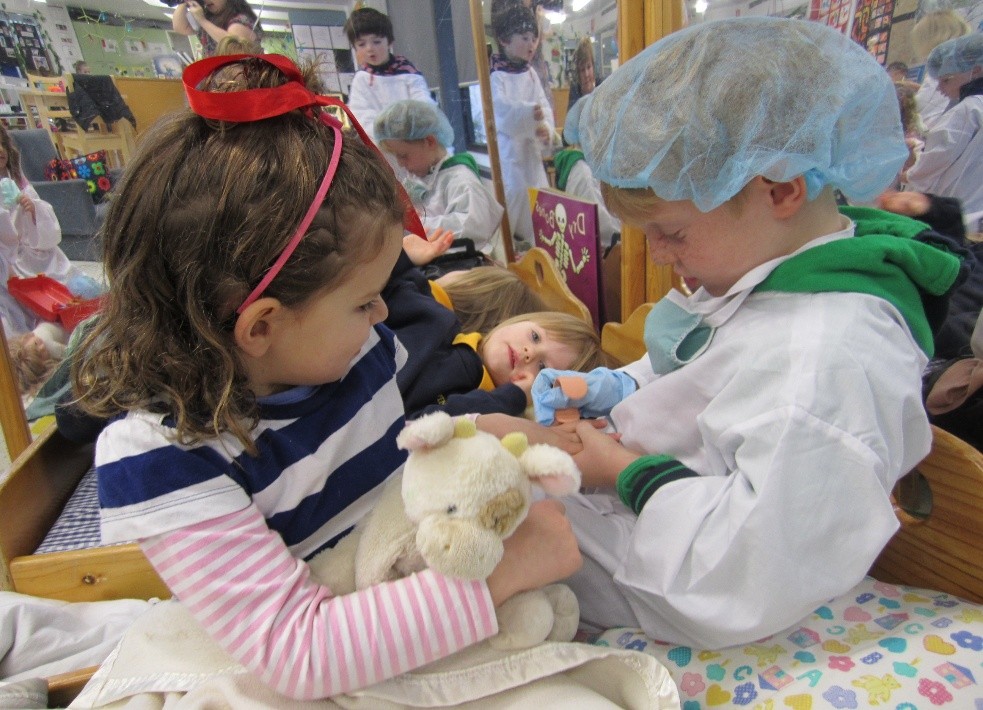
One group examined a photograph of children playing hospital, with white coats, surgical caps and a soft toy lamb receiving treatment. At first glance, it might look like a sweet photo for the journal. It turned out to be so much more, and what happened next revealed the power of looking again.
The group began by noticing "the deep understanding and transferring of knowledge from one context to another." When they came to name what they saw, they found empathy, trust, identity and accessibility, and one participant observed that "everyone has the opportunity to become a doctor or a nurse." As they connected these ideas, the discussion widened: children were negotiating roles, collaborating, taking responsibility for resources and practising care.
Then they began to expand the idea, and this is where the conversation became remarkable. What began as a familiar dramatic play scenario gradually opened into something much larger. A child caring for a toy lamb became a conversation about vets and animal care. That led to pharmacists and where medicines come from, and from there to the food we eat and how it keeps us well. Educators expanded the idea of healing to other areas of the curriculum: all living things require care, and big ideas are transferable across contexts.
Then came the breakthrough. The group recognised that children were already exploring how interconnected systems work inside a body, and suddenly the connection to sustainability became visible. Bodies rely on interconnected systems, and so do ecosystems. In their imaginations, the children's clinic moved into the garden. They pictured children caring for drooping plants, damaged leaves and tired patches of soil, examining nests with magnifying glasses, prescribing sunlight and water, and bandaging broken stems with twine. They even imagined repair clinics where books and toys could be mended rather than thrown away.
A patient, an animal, a plant, the soil, a book, a toy. These were not separate ideas but one big idea, healing and care, carried into new places. The children didn't change, the play didn't change, and the resources didn't change. What changed was the lens through which educators viewed the experience. Once they saw sustainability as relationships, systems, care and connection, it became impossible to unsee.
And the next step was simple enough to try the very next day: place a drooping plant beside the hospital play area, say nothing, and see what the children notice.
Sharing the Discovery: The Waggle Dance
Project Sustainability Collective believes in the cross-pollination of ideas. This key concept is represented by a waggle dance. Like the scout bees who explore a landscape and bring back vital information to the hive, each educator becomes a valuable scout bee.
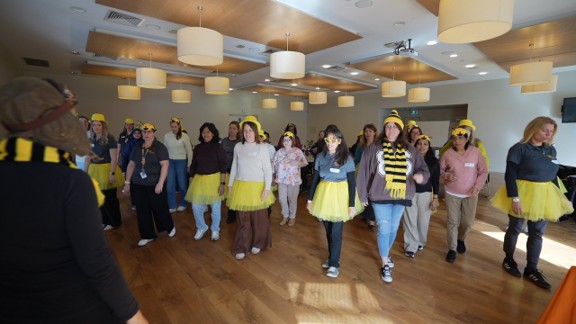
A discovery that stays with one bee feeds nobody. So after lunch, the educators put on yellow tutus and bee antennae and performed the waggle dance together. It was joyful, but it also captured the heart of the day. A scout bee leaves the hive and notices nectar. She judges whether it matters and relates it to the colony's needs, then dances in a way that benefits the whole hive. Our educators had been doing the same all day: noticing, naming, connecting and expanding. Ideas work the same way: when they are shared, they cross-pollinate. Every table's discoveries were then displayed together on a single wall, creating a collective map of everything the group had found.
What the Educators Were Left With
The shift wasn't that educators learnt new sustainability activities. It was that they recognised sustainability within activities they were already facilitating every day. In their own words:
"Realising sustainability can actually be connected to everything."
Others wrote of "noticing what I formerly could not see," and that "sustainability is much wider than I had believed it to be." One reflected that "it does not need to be difficult to teach and embed sustainability within the childcare setting and programme," and another left feeling "I will be able to walk out of here and practise the above tomorrow." Others named their biggest aha as "looking at learning through four words: notice, name, connect and expand," or simply "expanding our learning like a balloon." They left with four things.
A new lens: sustainability was already in their play
Educators began recognising sustainability in experiences they had never associated with it before: the doctors' corner, the mud kitchen, the block area, a child with a stick beside a rock. As one educator reflected, "My biggest aha moment is realising that sustainability is intertwined in most of our play programmes, from outdoor to indoor settings, from the gardening through to playing doctors." Another summed it up even more simply: "It is in front of us."
Their own agency: they are the influence
Looking back on their own childhood memories helped educators recognise the impact everyday experiences have on a child's understanding of the world. One participant described "realising the sustainability practices that were part of everyday life growing up, but are only now identifying them through the sustainability lens."
That recognition became a source of agency. These educators could see that they already hold tremendous influence over how children relate to people, places, and the natural world. As one wrote, the next step is to "acknowledge more of what I have, and share the knowledge with the children."
Four practices for every day
Notice, Name, Connect and Expand are simple enough to use in any moment of play. Several educators named the four words themselves as their biggest aha, and the practices are now becoming part of everyday practice.
A big idea to transfer
The hospital table left everyone with a big idea that travels: healing and care. All living things require care, and big ideas are transferable across contexts, from a toy lamb to a plant, the soil, a book or a toy.
Why This Matters
In our 2025 Sustainability Snapshot survey, 87.5% of the 200 services that responded reported that the EYLF V2.0 Sustainability Principle had had minimal impact on their practice. Yet what happened at Windermere suggests the issue is not a lack of commitment. These educators cared deeply about sustainability and were already creating rich learning opportunities about it. What many needed was a framework for recognising and extending what was already happening.
That matters because the first 2,000 days are a period when children's development and their relationship with the world form together. If educators see sustainability only as recycling, children may miss a much bigger lesson: that everything is connected and that they have a role to play in caring for those connections.
Your Educators Could Be Next
If you lead an early childhood service, or work with educators supporting primary-aged children, your team may already be doing far more than they realise. We start where educators are and work alongside them to develop education for sustainability towards sustainable futures.
Book a conversation with us. Email [email protected] to discuss bringing The Sustainability Shift to your educators. Not ready yet?
Visit our LinkedIn page and share the Windermere story with your team.
Not More to Do. More to See.
The educators of Windermere didn't leave with another initiative to implement. They left with something far more valuable: the ability to recognise sustainability in the moments that already fill their days. A child caring for a toy lamb. A family meal. A drooping plant. A stick beside a rock.
The children may never know a workshop took place. But because their educators learnt to see differently, those everyday moments now carry new possibilities. And that's how sustainable futures begin.
Not more to do. More to see.
We would love to work with you and your team. Enhancing education for sustainability through play, learning and thinking for educators and children is our lifelong calling.
Book a strategy call: https://projectsustainabilitycollective.com.au/calendar
Visit our Resources Page and Blog: https://projectsustainabilitycollective.com.au/resources
Bronwyn Cron and Lili-Ann Kriegler, Co-founders, Project Sustainability Collective


