Blog 4: THE WHOLE CHILD - Why Integration Matters More Than Isolation
How holistic development builds the capacities that predict lifelong success
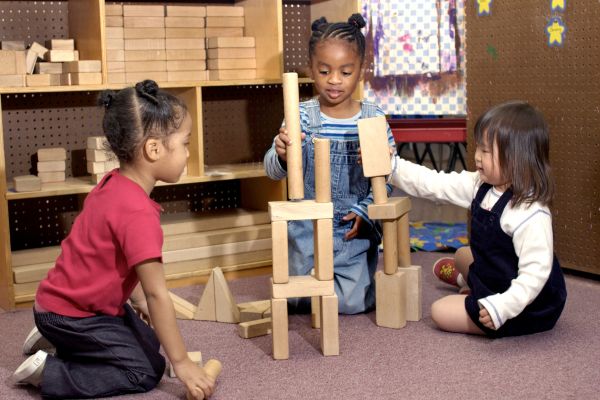
When a toddler stacks blocks, what's happening? Fine motor development? Learning about gravity? Practicing persistence? Building mathematical understanding? Regulating frustration?
The answer is yes. All of it. Simultaneously.
This is why experienced early childhood educators resist approaches that fragment learning into separate domains. You understand something fundamental: children develop as whole beings, not as collections of separate capacities.
Like a river red gum growing, you cannot separate root development from trunk strength from canopy growth. The tree grows as an integrated system. Support one aspect, and you strengthen the entire organism.
The neuroscience confirms what early childhood educators have always known: holistic development isn't just good pedagogy. It's a developmental necessity.
Why the Brain Requires Integration
Brain development is both hierarchical and interconnected. Higher-level functions depend on lower-level functions being well established (Tierney & Nelson, 2009). But the relationship isn't simply linear. It's deeply interconnected.
Emotional regulation supports cognitive learning. Physical development scaffolds social competence. Language development enhances emotional expression. Sensory integration underpins everything else.
Research on brain architecture shows these systems develop simultaneously and interdependently during the early years (ACECQA, 2024). Experiences that support one domain inevitably influence others. Deficits in one area create challenges in others.
When you provide opportunities for whole-child engagement, you're working with how brains actually develop.
Learning Is Embodied
Young children don't learn through abstract instruction. They learn through their bodies, senses, movements, emotions, relationships. Cognition is embodied.
When children manipulate objects, they're building neural foundations for abstract mathematical thinking. When they navigate space, they're developing spatial reasoning that supports later geometry and problem-solving. When they experience and name emotions in supportive relationships, they're building emotional literacy that supports social competence and cognitive flexibility.
The brain doesn't have separate filing systems for motor skills, cognitive skills, and social skills. It has integrated networks that support whole-person functioning.
Experiences that engage multiple systems simultaneously build more robust, more flexible, more integrated capacities.
What Integration Looks Like in Practice
High-quality early childhood education creates contexts where multiple capabilities develop together.
When children engage in dramatic play, they're simultaneously developing language, practicing social negotiation, regulating emotions, using symbolic representation, coordinating physical movements, building executive function, and developing empathy.
This isn't scattered or unfocused. It's integrated development, which is how the brain builds capacity.
Research confirms that high-quality childcare produces benefits across multiple domains: better vocabulary, greater social competence, reduced impulsivity (AIHW, 2024). These aren't separate achievements. They're interconnected outcomes of integrated development.
Relationships Support All Development
Responsive, nurturing relationships with caregivers develop language skills, secure attachment, and cognitive competence (Australian Department of Social Services, 2024). Not language OR attachment OR cognition. All three together.
Relationships are the context within which all development occurs. When a child feels secure, their stress response system settles, allowing their prefrontal cortex to engage in learning. When they feel connected, they're motivated to communicate. When they experience attunement, they develop capacity to understand others' perspectives.
You cannot separate social-emotional development from cognitive development. The same neural systems, the same stress regulation capacities, the same relational contexts support both.
When you prioritise relationships, you're not choosing social-emotional development over academic preparation. You're providing the foundation that makes all learning possible.
The Problem with Fragmentation
There's increasing pressure to demonstrate measurable outcomes in narrowly defined academic areas. This can lead to practices that fragment learning and reduce holistic development to checklists of competencies.
When we fragment development, we work against how brains actually build capacity.
A child drilled in letter recognition without rich language experiences and meaningful contexts isn't developing literacy in an integrated way. A child taught to count without opportunities to manipulate quantities and solve real problems isn't developing mathematical thinking.
When cognitive outcomes are prioritised at the expense of physical development, social-emotional learning, or creative expression, we undermine the very cognitive development we're trying to support.
Research shows that development at 22 months predicts outcomes at age 26 (University of Oxford, 2021). What develops during those early years? Not isolated academic skills. Integrated capacities: emotional regulation, sustained attention, problem-solving, relating to others, persistence.
These are whole-child competencies. They cannot develop through fragmented approaches.
Why Holistic Approaches Matter Most for Vulnerable Children
Research consistently shows that high-quality early childhood education produces the greatest gains for children from disadvantaged backgrounds (AIHW, 2024). But quality is defined by holistic, relationship-based, developmentally supportive practice.
Children experiencing adversity often arrive with heightened stress response systems, disrupted attachment patterns, and limited access to enriching experiences. They need integrated support for whole development. They need relationships that buffer stress. They need environments that provide rich stimulation. They need opportunities to develop emotional regulation alongside cognitive capacity.
Holistic, relationship-based practice is not a luxury. It's essential for all children, and most critical for those facing adversity.
What Whole-Child Practice Requires
Holistic practice is more complex, not less complex, than fragmented approaches. It requires deep understanding of child development across all domains. It requires capacity to observe and respond to children's integrated learning. It requires skill in designing environments that support multiple capabilities simultaneously.
This knowledge comes from ongoing professional development, reflective practice, and sophisticated pedagogical understanding. Holistic practice requires professional expertise. It requires you.
It also requires time and space for observation and response. It requires ratios that allow for meaningful interaction. It requires planning time to reflect and design responsive environments. It requires continuity of relationships.
Quality holistic practice requires working conditions that support it.
What Holistic Development Produces
Children who experience integrated, relationship-based, holistic early childhood education develop robust, flexible, generalisable capacities:
Executive function: The capacity to focus attention, hold information in working memory, flexibly shift between tasks, inhibit impulses, plan and organise. These capacities underpin all future learning.
Emotional regulation: The ability to identify, understand, and manage emotions in ways that support wellbeing and relationships. This predicts mental health and academic achievement.
Agency and competence: The sense of themselves as capable learners who can solve problems and persist through challenges. This supports resilience and lifelong learning.
Relational capacity: The ability to build positive relationships, understand others' perspectives, cooperate and collaborate. This supports social success across the lifespan.
These are the foundations that predict success at age 26. And these can only develop through whole-child approaches.
Growing Whole
The river red gum doesn't grow its roots first, then its trunk, then its branches. It grows as an integrated organism, with all systems developing simultaneously and interdependently.
Children develop the same way. Not in isolated domains, but as integrated beings. Support emotional regulation, and you enhance cognitive learning. Build physical competence, and you strengthen social confidence. Nurture creativity, and you develop problem-solving capacity.
Your understanding of holistic development is grounded in the neuroscience of how brains build capacity, the research on what predicts lifelong outcomes, and the wisdom of experienced professionals who see children whole.
The fragmentation comes from systems that reduce complexity for measurement. The integration is how humans actually develop.
Trust your understanding. Advocate for approaches that honour the whole child. Because holistic development isn't just better practice. It's developmental necessity.
References:
Australian Children's Education and Care Quality Authority (ACECQA). (2024). Brain development in the early years. Retrieved from https://www.acecqa.gov.au/latest-news/blog/brain-development-early-years
Australian Department of Social Services. (2024). Why children and their early years matter: Evidence summary supporting the Early Years Strategy 2024–2034. Australian Government.
Australian Institute of Health and Welfare (AIHW). (2024). Learning and development: Impact of early childhood education and care. Retrieved from https://www.aihw.gov.au/reports/children-youth/learning-development-impact-of-early-childhood-edu/summary
Tierney, A. L., & Nelson, C. A. (2009). Brain development and the role of experience in the early years. Zero to Three, 30(2), 9–13.
University of Oxford. (2021). New research highlights importance of early years development on future wellbeing: The SEEN Project. Retrieved from https://www.psych.ox.ac.uk/news/new-research-highlights-importance-of-early-years-development-on-future-wellbeing


